When a Display Window Becomes a Communication Channel: Digital Displays at Palanga Concert Hall
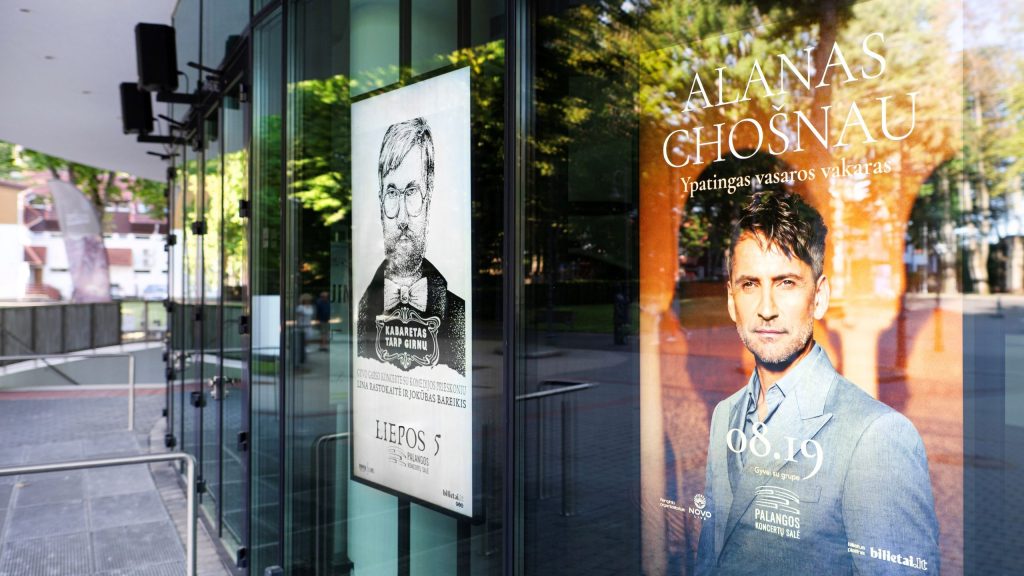
Communication in contemporary public spaces is increasingly moving to digital displays. Today, building windows can become active, strategically managed communication channels. BMK implemented precisely this type of solution at Palanga Concert Hall.
Before the project, the windows featured static lightboxes. Although they served an informational purpose, this solution limited the speed and flexibility of content updates, as well as the organisation’s ability to respond to frequently changing communication needs. A cultural institution where information about events and the programme changes constantly required a more dynamic solution.
The main objective was to transform the window’s advertising space into an active digital communication channel that would be easy to manage, aesthetically integrated into the building’s architecture, and clearly visible from both outside and inside.
Implemented solutions
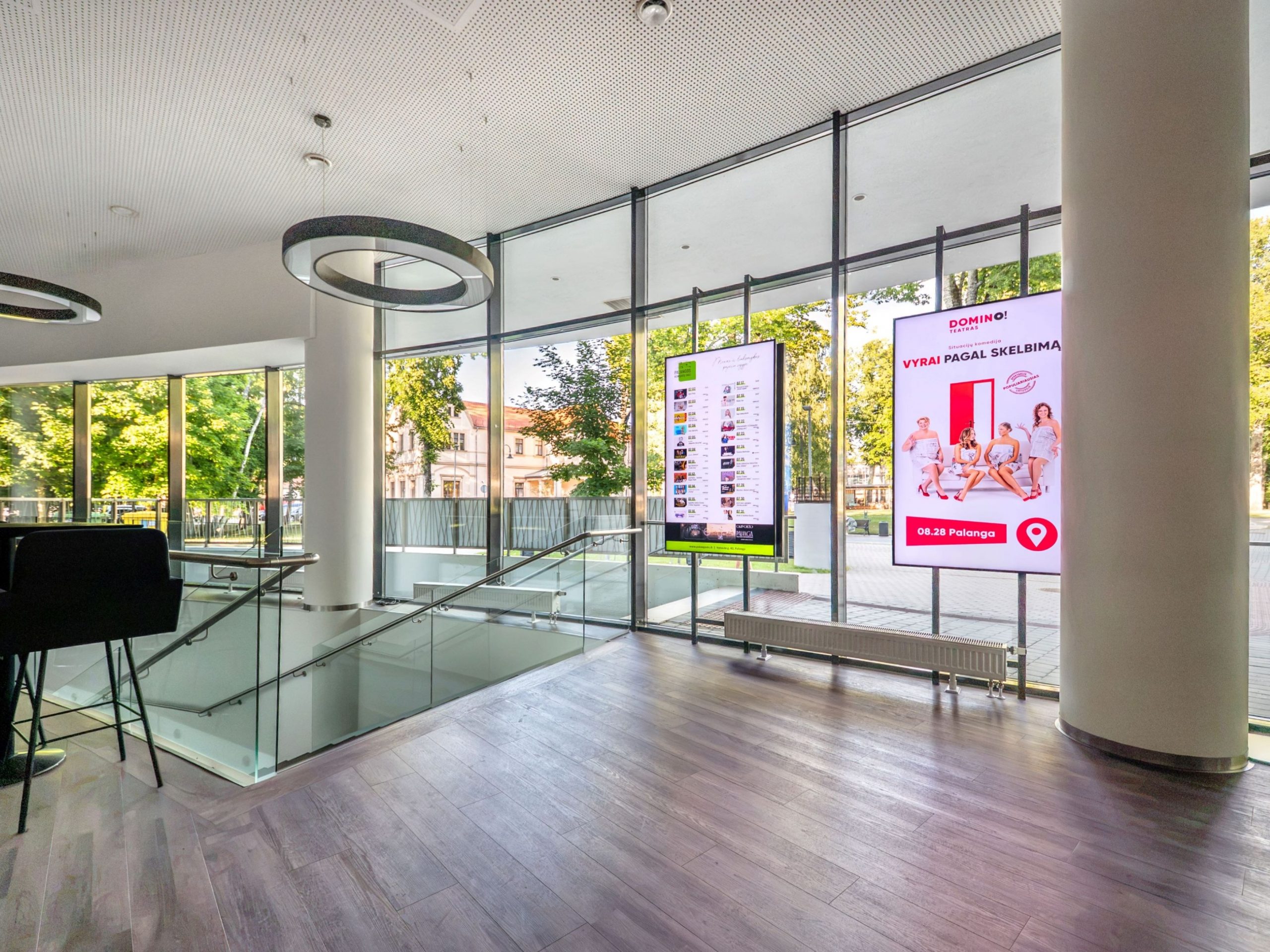
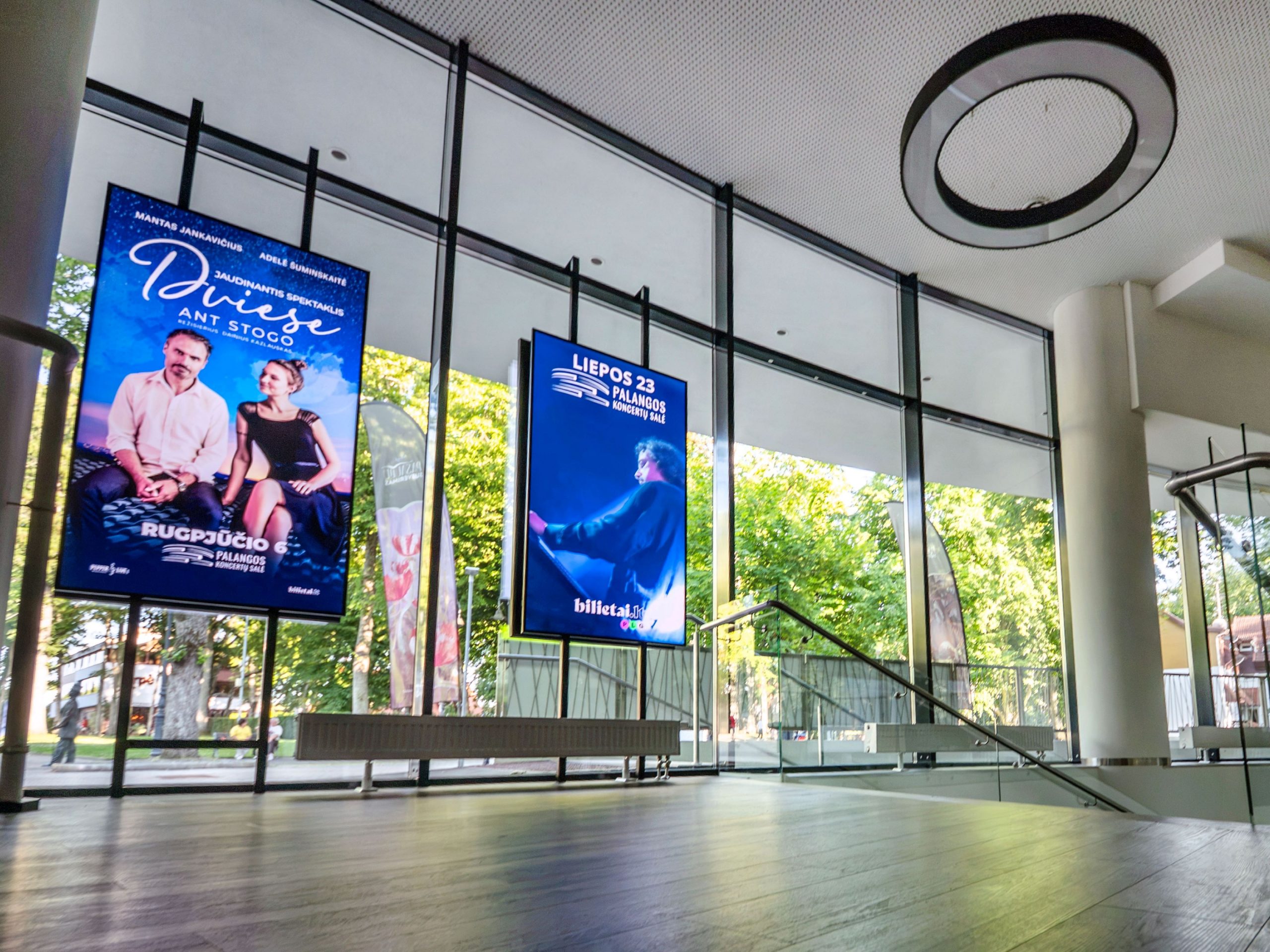
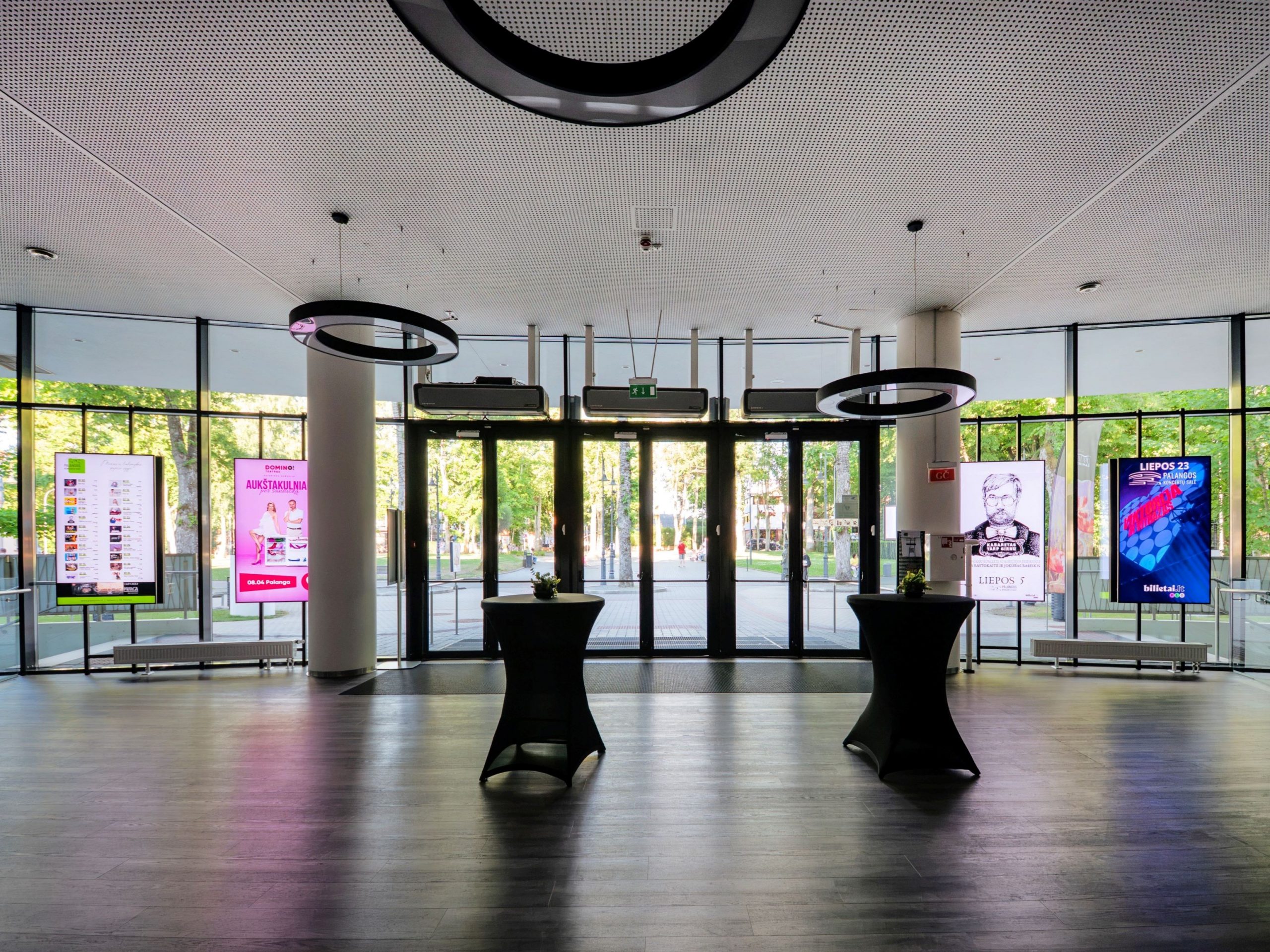
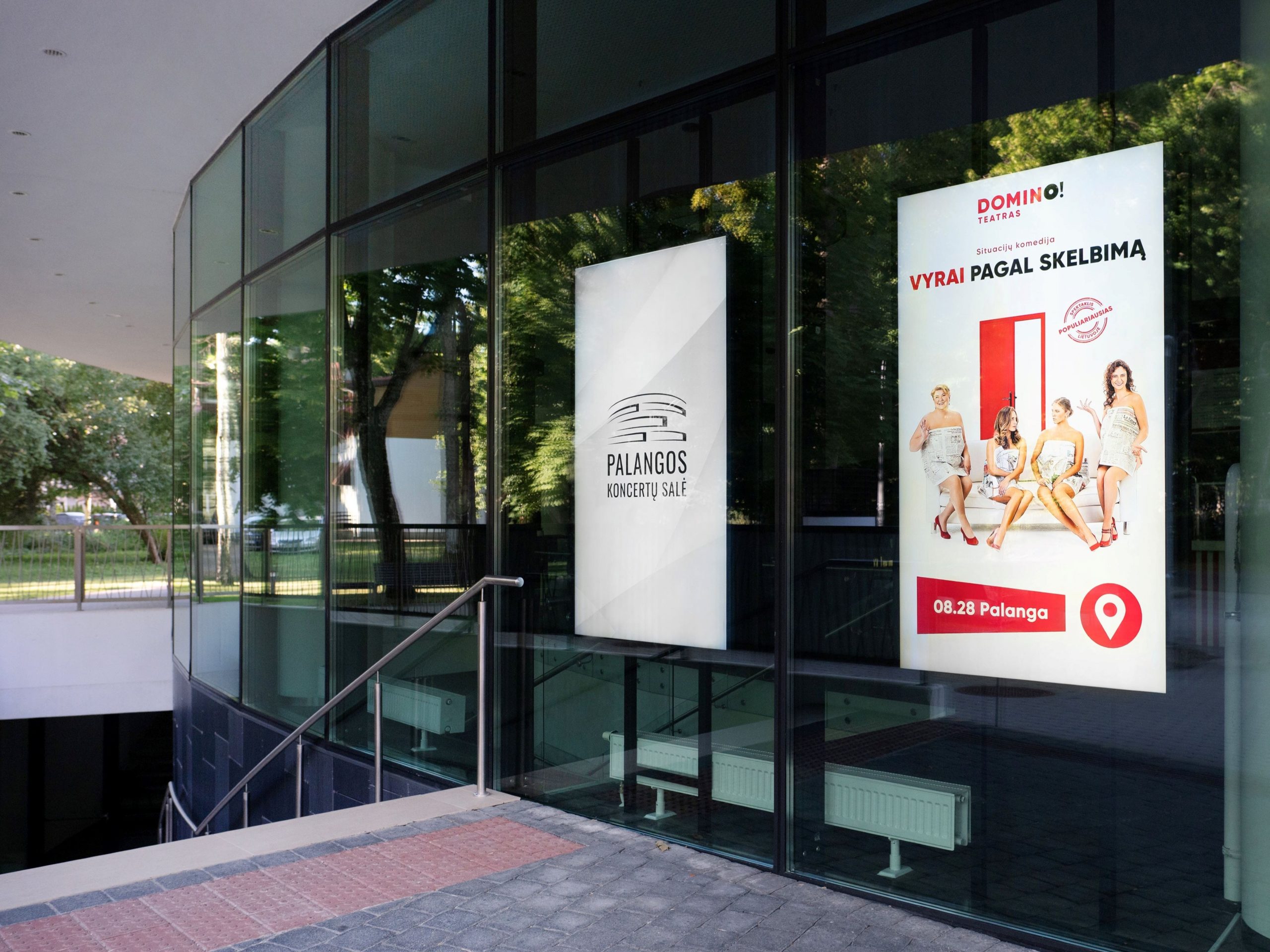
Four double-sided display units adapted to the architecture of the building’s windows were installed. The structures were designed to blend harmoniously into both the interior and exterior without overwhelming the space, while complementing the building’s overall aesthetic.
On the street-facing side, BMK installed 1,970 × 960 mm digital advertising displays featuring ultra-bright 4,000-nit panels, ensuring excellent visibility even in intense daylight. This allows the building’s façade to serve as a highly visible advertising channel capable of attracting audience attention. On the interior side, professional 500-nit displays with a matte finish ensure high-quality image presentation for visitors and employees.
The system is managed centrally through a content management platform that allows content to be created, scheduled, and updated remotely across all displays. Event information, announcements, visuals, and client advertisements can be changed quickly and in real time.
Following the completion of the project:
- Static advertising was replaced with dynamic, visually engaging, and easily managed communication.
- Content can be updated in real time from any location.
- Professional LED displays designed for 24/7 operation provide a reliable, long-term solution.
- The windows’ potential for both external and internal communication has been fully utilised.
- The visibility of information, flexibility, and overall communication efficiency have increased.
The Palanga Cultural Centre project is an excellent example of how technology can be integrated both functionally and aesthetically, creating lasting value for an organisation’s communication.